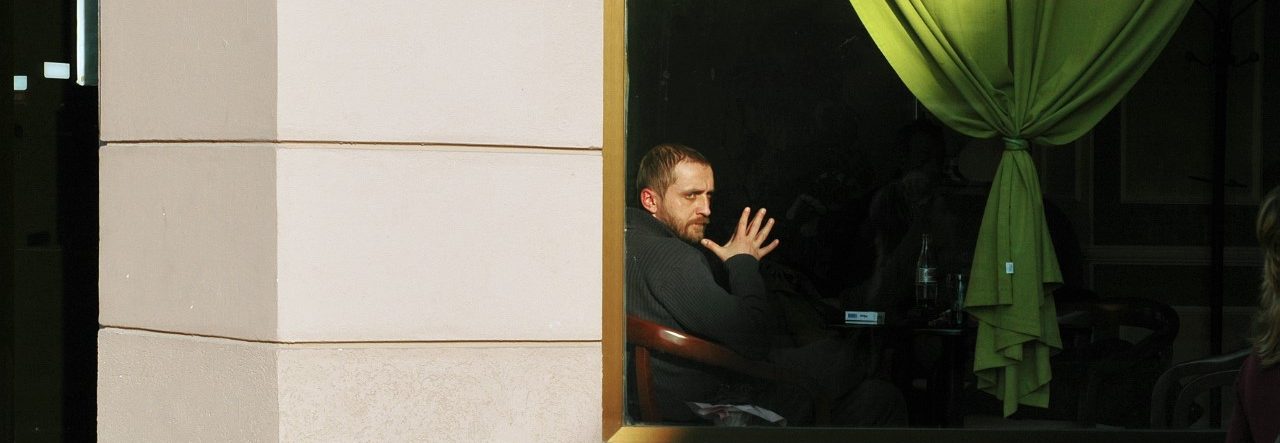
My Sarajevo
My Sarajevo, unfortunately, is decreasing day by day. Some people leave while other people arrive in this city that is constantly being built and rebuilt, often hideously. Only that which cannot be rebuilt remains in memory.
I wrote an entire book about this city, the book of poetry — Transsarajevo — along with countless other texts. I built this city in my literature, and the city was built into me, in a symbiotic process. At one time, I was heavily addicted to this city — wherever I went, I could hardly wait to return to it.
Several times I tried unsuccessfully to leave Sarajevo, but people from here know how difficult such a move can be. Right now, I feel I’m the closest I’ve ever been to departure, because the only things keeping me here are happy memories.
To be clear, Sarajevo is a comfortable place for many, if your priorities are to work minimally and to live a simple life. This is quite possible here, and in fact all over Bosnia; somehow people are surviving. They like parties, entertainment: hedonism can seduce you at any moment. The food is good and cheap if you come from Western Europe or some other rich country. People are hospitable and cordial, if we exclude certain taxi drivers and the usual fraudsters.
Photo: Zoran Kanlić

I had to fight for Bosnia. That’s how I know Ukrainians can win, and they will rebuild
Chronological time stops ticking during war. We wore watches on our wrists but they showed a meaningless time. We were cut off from the rest of our country and the civilised world. We were five hours’ drive from Vienna, at least before the war. Now we lived as if we were at the end of the world, so time was irrelevant. A new time was ticking inside us – the one you count from the moment your idyllic, civic life collapses and you become a refugee. After the first moments of shock, we were quick to embrace the apocalyptic way of life.
Wir lebten am Ende der Welt
So manch ein Datum ist wie ein Grenzstein, der die Zeit vor und nach der Katastrophe präzise teilt.
Mein Datum ist der 21. April 1992, als der Angriff auf meine Stadt Bosanska Krupa begann. Es ist mir fast so nah wie mein
Geburtsjahr. Ich wurde am 21. April nicht wiedergeboren, aber für mich und viele andere trat der Krieg in unser Leben und hat
es seither nicht verlassen.
An diesem Tag saß ich im Schanigarten des Café Casablanca, trank Bier und hörte Musik. Um genau 18.10 Uhr begann der Beschuss auf die Stadt. Ich trug eine Daunenjacke, Levi’s und Adidas. Die Jeans würde ich in der Stadt Cazin, wo ich Flüchtling sein würde, später gegen 120 D-Marktauschen. Im Café West habe ich sie abgestreift und an den Lokalbesitzer verkauf
Srebrenica, a Sacred Place and a Place of Reconciliation
(…) Following the history lesson, we continued walking around the Memorial Centre. The usual procedure is to let visitor decide whether they want to walk around on their own or have a guide take them through the vast space populated by white tombstones. Then, on a path between the graves, I chanced upon an older woman who started telling me about her murdered children. Of everything she said, I remembered the sentence: “Children are not mushrooms.”
 faruk šehić